

 Student Login
Understanding Dyslexia
What You Need to Know
Dyslexia is a common learning difference that affects the way individuals process written and spoken language. It is characterized by difficulties with accurate and/or fluent word recognition and by poor spelling and decoding abilities. Despite these challenges, dyslexia does not reflect an individual's overall intelligence; rather, it involves specific areas of the brain that influence reading and language processing.
The Science Behind Dyslexia
Research has revealed that dyslexia is rooted in the brain's structure and function. Here's what we know:

Phonological Deficit
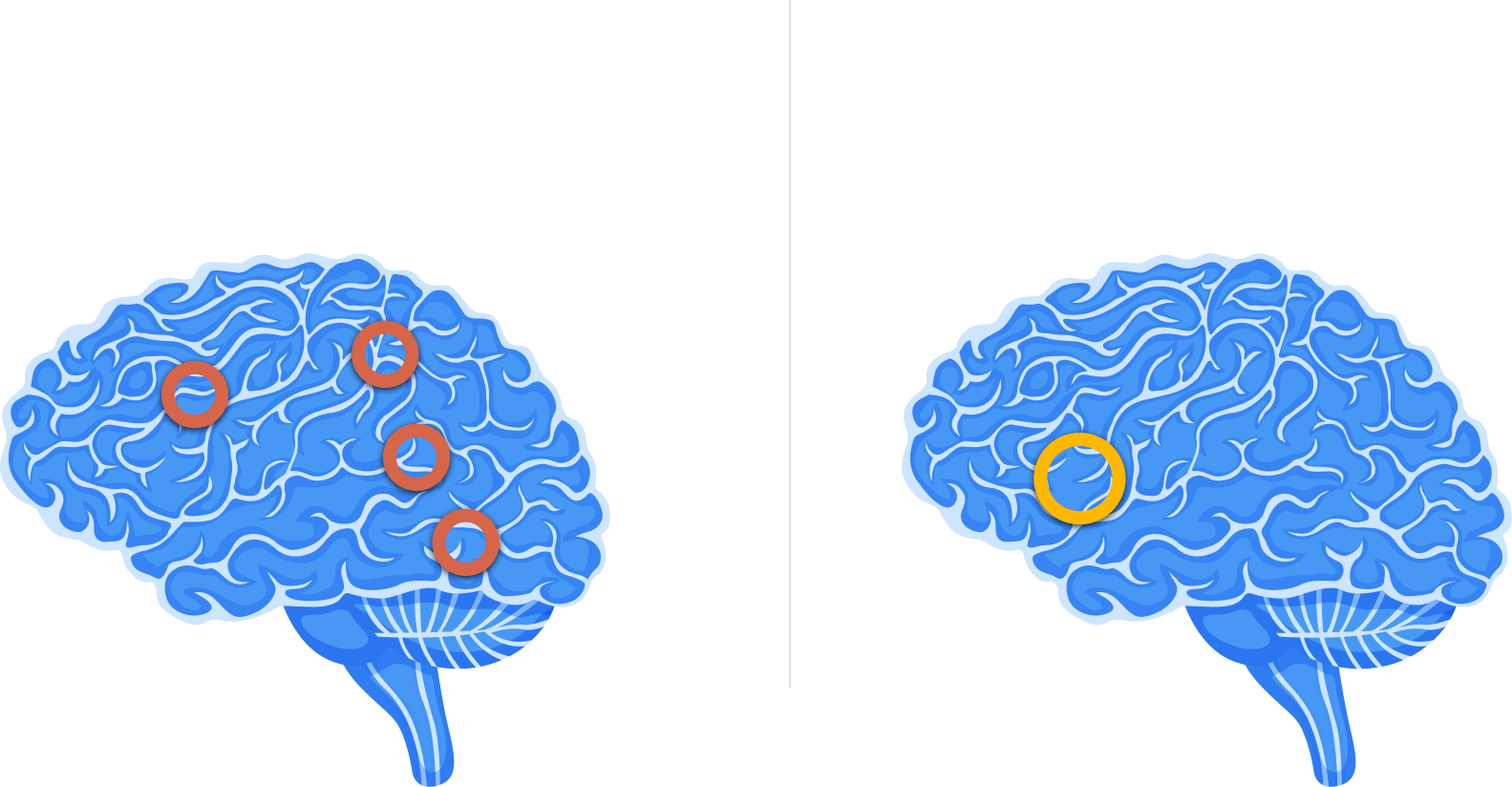
A primary cause of dyslexia is a phonological deficit in the left brain, which impacts the ability to decode words.

Visual Attention Span
Dyslexia is also linked to deficits in visual attention span (VAS), affecting how individuals perceive and process visual information.

Right Brain Adaptation
Dyslexic readers often use the right side of their brain, which is involved in visual-spatial processing and executive functions, to compensate for the phonological deficit. Studies show that increased activation in these right-brain areas correlates with improved reading skills over time.

IQ Independence
Dyslexia is independent of IQ. It affects individuals across all levels of cognitive ability, emphasizing that dyslexia is not a reflection of intelligence but rather a specific learning difference.
Key Insights from Recent Research
Recent studies have deepened our understanding of dyslexia:

Phonological vs. Visual-Spatial Processing
Research has identified that dyslexia involves both phonological deficits and visual-spatial processing challenges. Addressing these through targeted interventions can lead to significant improvements in reading skills.
Read the Research
Advances in brain imaging have shown that dyslexic individuals may have different neural pathways and activation patterns compared to typical readers. This insight allows for the development of specialized teaching methods that leverage their unique strengths.
Why This Matters
Understanding dyslexia is crucial for developing effective educational strategies. By recognizing the specific neural and cognitive aspects of dyslexia, educators and parents can better support dyslexic learners with tailored interventions. At BrainScience Works, we integrate these insights into our products to provide tools that address both the challenges and strengths of dyslexic individuals.